TANF at 30
Landmark Dates for TANF
From the Director of the Office of Family Assistance:
- Thirty Years Later, Welfare Reform Needs Its Own Reform
- TANF and Work: The Gap Between Perception and Reality
- TANF and Work: The Caseload Reduction Credit and How States Exploit It
- The Prevalence of TANF Child-Only Cases Involving Immigration-Status-Ineligible Parents
- Safeguarding TANF Assistance: State Options for EBT Location and Purchase Restrictions
Families are Stronger Together
Successful collaboration between Tribal Temporary Assistance for Needy Families (TANF) and child welfare programs needs to continue beyond a grant period or pilot project. This Office of Planning, Research, and Evaluation resource helps Tribal…
This National Indian Child Welfare Association collection provides service providers with resources for working with Native children and families involved with child welfare. It brings together information that can help professionals better…
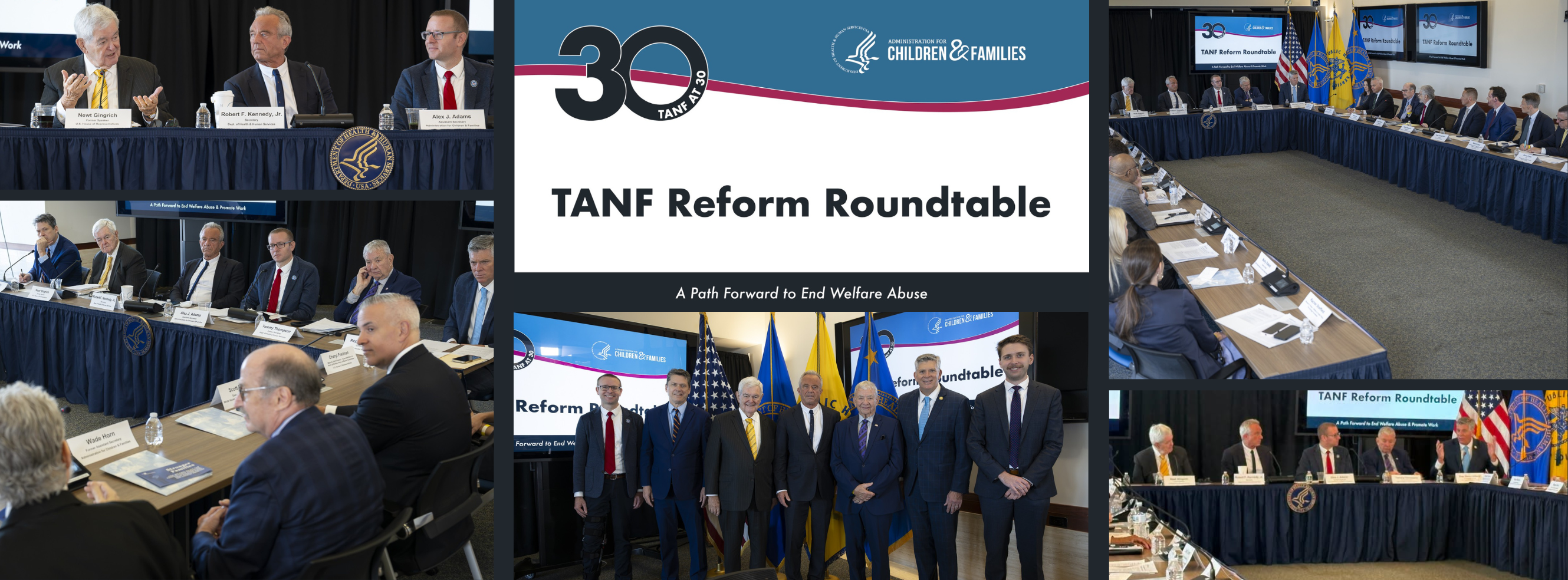
This year marks the 30th anniversary of the Temporary Assistance for Needy Families (TANF) program, commonly known as TANF, which was established in 1996. TANF evolved from the former Aid to Families with Dependent Children (AFDC) program,…
The Administration for Children and Families (ACF) is seeking input on the use of research from a range of audiences working in Temporary Assistance for Needy Families (TANF) or related family self-sufficiency programs. TANF…
The U.S. Department of Health and Human Services added new peer support programs to the Title-IV Prevention Services Clearinghouse, for which all states can now claim federal reimbursement. The expansion advances the Trump Administration’s Great…
The Administration for Children and Families (ACF) has announced the Title IV-E Prevention Accelerator Grant, a new funding opportunity to help eligible Title IV-E agencies implement and sustain evidence-based prevention services that…
Work Innovations
The Director’s Corner provides a regularly updated collection of resources selected or highlighted by the Director of the Office of Family Assistance, David Swegle. Recent resources address timely Temporary Assistance for Needy Families (TANF)…
This I Am Dad podcast examines a practical question for fatherhood programs: what helps fathers participate consistently enough to benefit from services? The conversation explores the difference between incentives and supports, the barriers that…
This Jobs for the Future resource examines Workforce Innovation and Opportunity Act waiver decisions for 40 states and territories and highlights several emerging approaches, including reaching young people earlier, expanding employer-driven…
Youth apprenticeship is expanding, but programs can look quite different depending on how they are structured and which organizations are involved. This Urban Institute report identifies four models of Registered Youth Apprenticeship Programs:…
Career-Connected Learning in Maryland helps students understand how what they learn in school connects to future education, training, and careers. This webpage can provide knowledge about apprenticeships and career-connected learning experiences…
The newly renovated Career Pathways: Catalog of Toolkits webpage offers an improved user experience and makes it easier to find workforce development resources. Developed by the Office of Family Assistance, the 2025 catalog features 24 toolkits…
Promoting Healthy Marriages and Two-Parent Families
The MIT Living Wage Calculator estimates the income families need to cover basic expenses based on where they live and family size. It helps clarify a common disconnect in Temporary Assistance for Needy Families (TANF) work—employment alone does…
This California Department of Financial Protection and Innovation guide provides practical tips for couples on managing money together. It covers how to communicate about finances, set shared goals, create a budget, and decide whether to combine…
This free financial education resource from the Federal Reserve Bank of Dallas offers straightforward, beginner‑level guidance on building personal financial stability and wealth. The guide walks through key topics like setting goals, creating a…
This resource shares ten principles for managing money in marriage, covering topics like communication, shared goal-setting, debt management, and long-term financial planning. TANF programs can partner with faith- and community-based…
These episodes from the Made for Love podcast explore how faith and financial decision‑making intersect: from personal money management to how couples and families navigate budgeting, communication, and shared goals through a spiritual lens. Part…
This website is a free financial empowerment toolkit from the Consumer Financial Protection Bureau designed to help frontline staff talk about money with the people they serve and support their meaningful financial progress. It includes 40+…