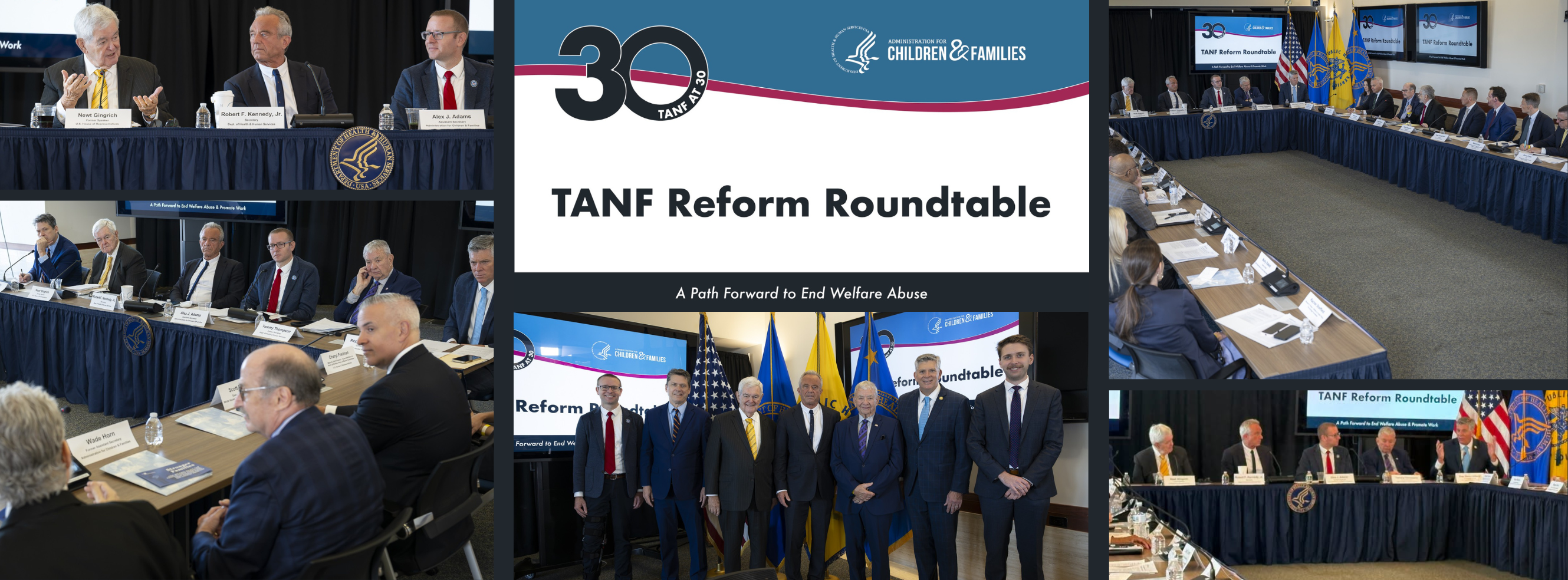
TANF at 30
Landmark Dates for TANF
From the Director of the Office of Family Assistance:
- Thirty Years Later, Welfare Reform Needs Its Own Reform
- TANF and Work: The Gap Between Perception and Reality
- TANF and Work: The Caseload Reduction Credit and How States Exploit It
- The Prevalence of TANF Child-Only Cases Involving Immigration-Status-Ineligible Parents
- Safeguarding TANF Assistance: State Options for EBT Location and Purchase Restrictions
Families are Stronger Together
The Tribal Temporary Assistance for Needy Families (TANF) and Child Welfare Coordination (TTCW) program funds demonstration projects administered by the Administration for Children and Families’ (ACF) Office of Family Assistance. These projects…
Aspen Institute released this financial capability toolkit designed for opportunity youth, or young people ages 16–24 who are disconnected from school and work. The toolkit helps practitioners bring financial education into programs through…
Building financial security starts with making sure families know about available opportunities. This Urban Institute resource explores early findings showing that many families who could benefit from new Trump Accounts are unaware the program…
This webpage from Washington State demonstrates how a state agency can use mobile offices to deliver public services directly to communities. For Temporary Assistance for Needy Families (TANF) practitioners, the resource offers a real-world model…
Families in rural areas often need help from multiple programs, but transportation, distance, and limited staffing can make it difficult to access services in one place. The Rural Health Information Hub toolkit offers practical strategies…
When families cannot easily travel to a service office, bringing services directly into communities can make a significant difference. The model from Rural Health Information Hub shows how agencies, including Temporary Assistance for Needy…
Work Innovations
Transitioning from foster care into adulthood can be challenging for any young person, but Native youth may also be navigating questions of culture, community, identity, and connection. This resource from the National Tribal Child Welfare Center…
In June 2026, the Office of Family Assistance launched the Programming to Build Strong Families and Promote Economic Independence series, designed to provide flexible, practice-informed…
In June 2026, the Office of Family Assistance launched a series to guide TANF programs in building strong families and promoting economic independence in Tribal communities. This series was designed to provide flexible, practice-informed…
Aspen Institute released this financial capability toolkit designed for opportunity youth, or young people ages 16–24 who are disconnected from school and work. The toolkit helps practitioners bring financial education into programs through…
The Workforce Pell initiative expands federal Pell Grant eligibility to certain short-term training programs, creating new opportunities for individuals seeking credentials that can lead to employment in high-demand industries. As states and…
This webpage highlights KANSASWORKS’ mobile workforce center that brings employment services to rural and underserved communities. This is a practical example of how workforce agencies can meet people where they are. Temporary Assistance for…
Promoting Healthy Marriages and Two-Parent Families
The Administration for Children and Families' Office of Family Assistance (OFA), Division of Tribal Temporary Assistance for Needy Families (TANF) Management and the Office of Child Support Enforcement hosted a Webinar entitled "Partnering for…
The Administration for Children and Families' Office of Family Assistance (OFA), Division of Tribal TANF Management hosted a Webinar, "Tribal Temporary Assistance for Needy Families Webinar." This Webinar was the first of a two-part series, and…
The Office of Family Assistance hosted the "Broadening the Scope of Work Activities: Using Cultural Activities in Tribal Communities" Webinar to provide an opportunity for participants to hear from Tribal Temporary Assistance for Needy Families (…
The U.S. Department of Health and Human Services, Administration for Children and Families (ACF), Office of Family Assistance (OFA), Region IX hosted six Tribes from Arizona, community stakeholders and topical experts at the 2011 Tribal TANF…
The following report describes the Urban Partnerships for Welfare Reform Academy II that took place in Minneapolis, Minnesota from October, 26-29 2003 to continue partnerships and foster collaboration to improve service delivery and TANF…
This report describes this Rapid Response Technical Assistance event held in Washington, DC, September 5-6, 2001. The purpose of this conference was to give practitioners an opportunity to exchange information on experiences, learn of promising…