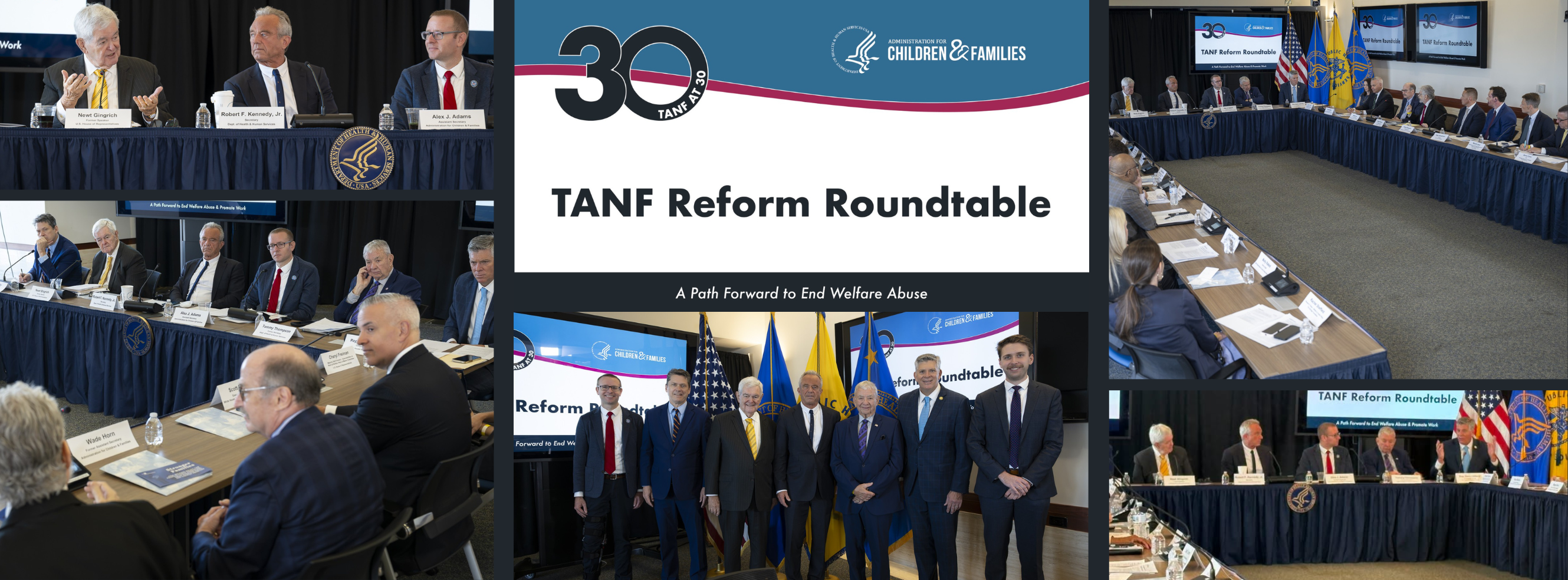
TANF at 30
Landmark Dates for TANF
From the Director of the Office of Family Assistance:
- Thirty Years Later, Welfare Reform Needs Its Own Reform
- TANF and Work: The Gap Between Perception and Reality
- TANF and Work: The Caseload Reduction Credit and How States Exploit It
- The Prevalence of TANF Child-Only Cases Involving Immigration-Status-Ineligible Parents
- Safeguarding TANF Assistance: State Options for EBT Location and Purchase Restrictions
Families are Stronger Together
This report is part of the Congressional Research Services series that focuses on changes in programs affecting low-income children in light of the upcoming 30-year anniversary of the enactment of the Personal Responsibility and Work Opportunity…
This report is part of the Congressional Research Services series that focuses on changes in programs affecting low-income children in light of the upcoming 30-year anniversary of the enactment of the Personal Responsibility and Work Opportunity…
This report is part of the Congressional Research Services series that focuses on changes in programs affecting low-income children in light of the upcoming 30-year anniversary of the enactment of the Personal Responsibility and Work Opportunity…
This report is part of the Congressional Research Services series that focuses on changes in programs affecting low-income children in light of the upcoming 30-year anniversary of the enactment of the Personal Responsibility and Work Opportunity…
In June 2026, the Office of Family Assistance launched the Programming to Build Strong Families and Promote Economic Independence series, designed to provide flexible, practice-informed…
When a young person turns 18 in foster care, the system too often just disappears. Extended foster care (EFC) programs exist to bridge that gap, keeping older youth connected to support as they transition into adulthood. But not all extended care…
Work Innovations
In June 2026, the Office of Family Assistance launched the Programming to Build Strong Families and Promote Economic Independence series, designed to provide flexible, practice-informed…
Positive father involvement can strengthen families, support child well-being, and improve outcomes for children. This National Responsible Fatherhood Clearinghouse webpage highlights its public awareness campaign, which offers videos, messages,…
Financial stability can play an important role in helping fathers support their children and strengthen their families. Financial Foundations is a free, virtual curriculum designed to help participants build practical skills related to budgeting…
Benefit cliffs can create difficult choices for families as earnings increase and public assistance begins to phase out. The American Public Human Services Association will host a webinar on June 22, 2026 at 1:00 p.m. ET to explore strategies for…
Supportive services—such as childcare, transportation, housing assistance, and career coaching—can make the difference between participating in employment services and successfully reaching long-term goals. This National Skills Coalition resource…
Approximately one in seven young people in New York City between the ages of 16 and 24 are not in school or not working. This MDRC brief examines the Advance & Earn program, which combines education, career coaching, and paid work experiences…
Promoting Healthy Marriages and Two-Parent Families
This resource by Study.com provides practical family conflict resolution activities that help people recognize what is driving disagreement, see situations from different perspectives, and work through problems in a more structured way. For…